Straight answers for anyone sending flowers to someone in Korea from abroad, from a florist who has done this for more than ten years. If your question isn't here, message us — a person answers.
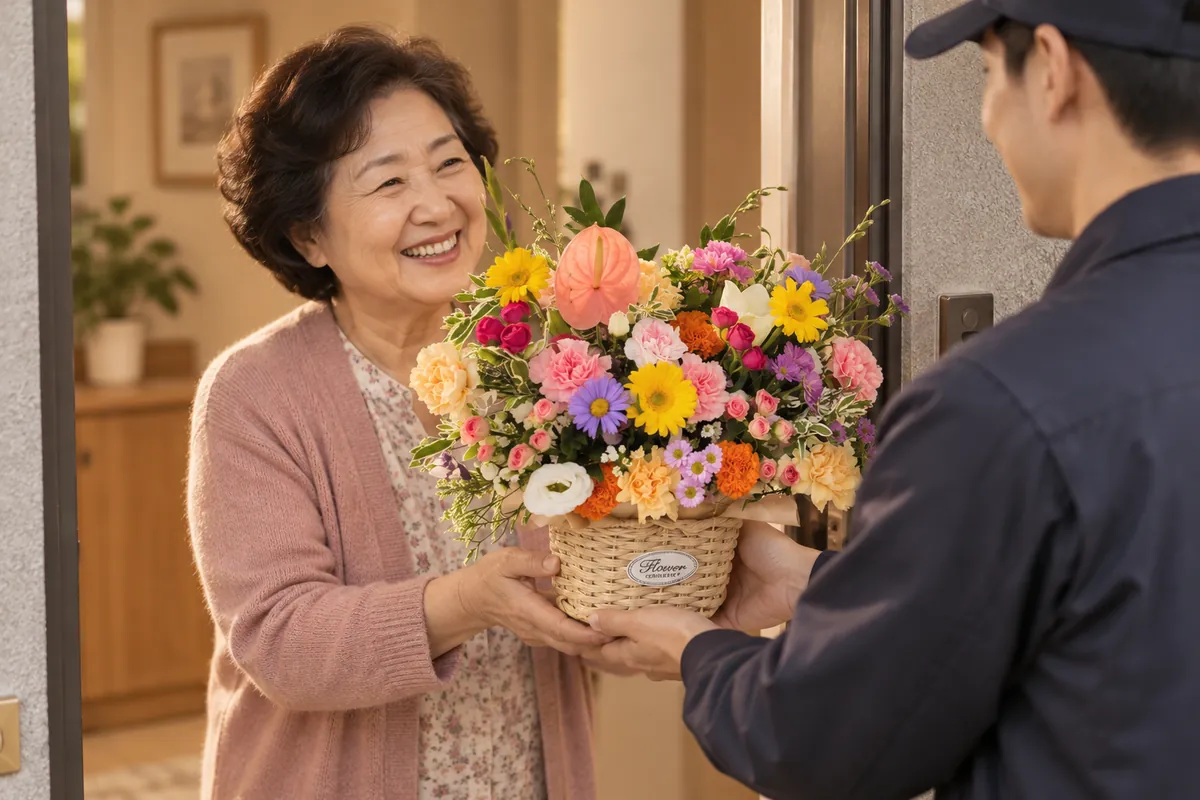
Yes — it is most of what we do. Order in English, pay with an international card, and tell us where your person is in South Korea. A florist near them makes the flowers fresh that same day and delivers them by hand, anywhere in the country.
We take orders 08:00–21:00 KST, open every day. Order by 6:00 PM KST for same-day delivery. If you are ordering from another time zone, work back from the Korean time (KST) you want the flowers to arrive — and we email you a photograph once they do.
If anything is unclear, start a live chat on this site (08:00–21:00 KST, open every day). A person who has done this for years answers — not a bot.
Should I send a bouquet or one of those large standing wreaths?
It depends on whether you are sending to a person or to an occasion.
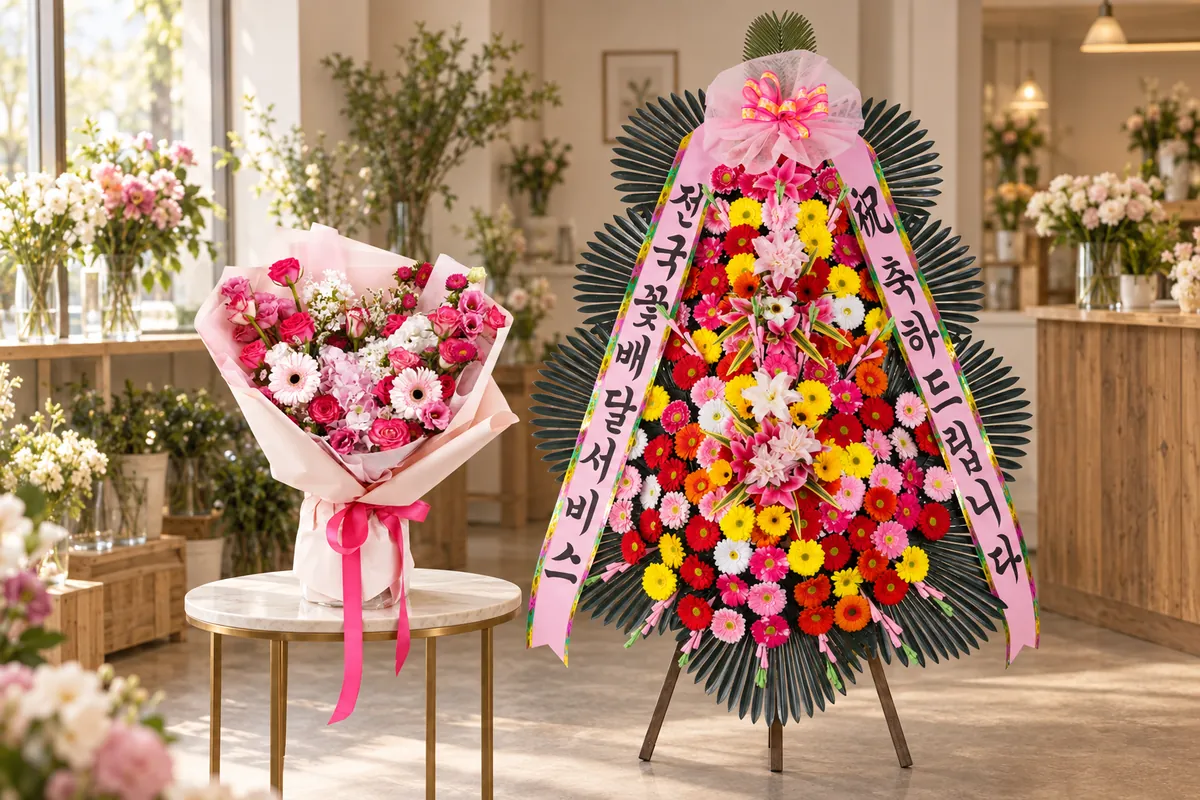
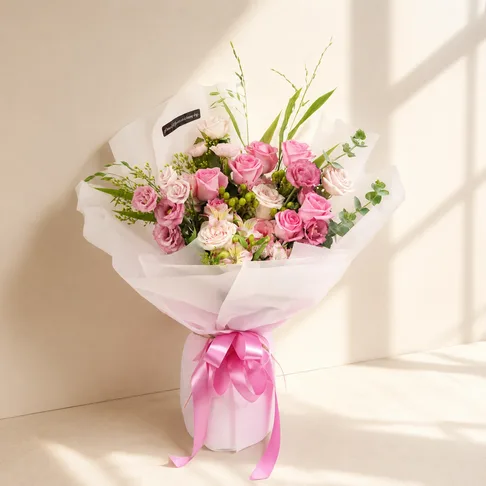
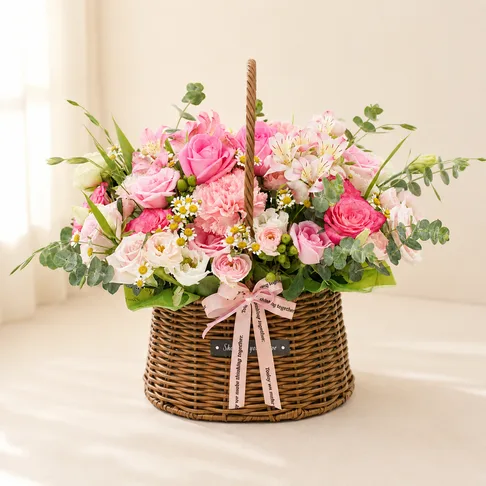
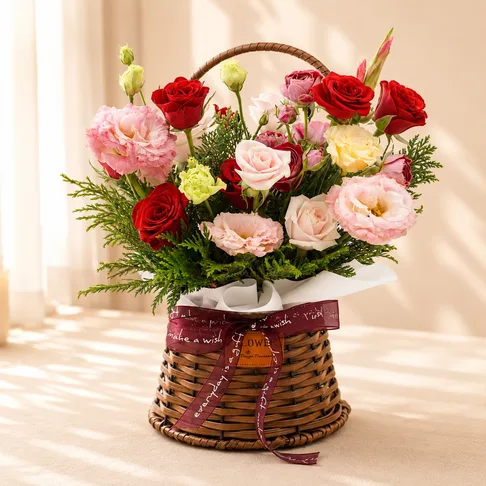
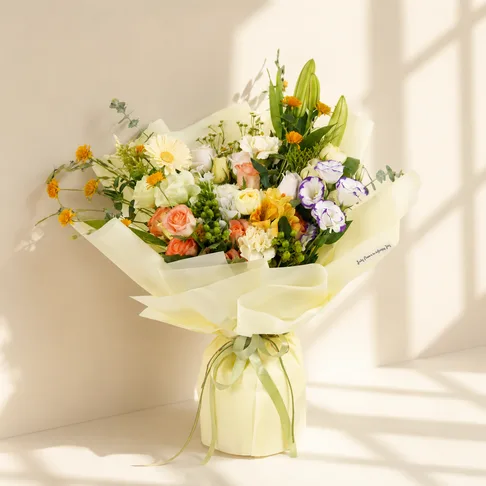
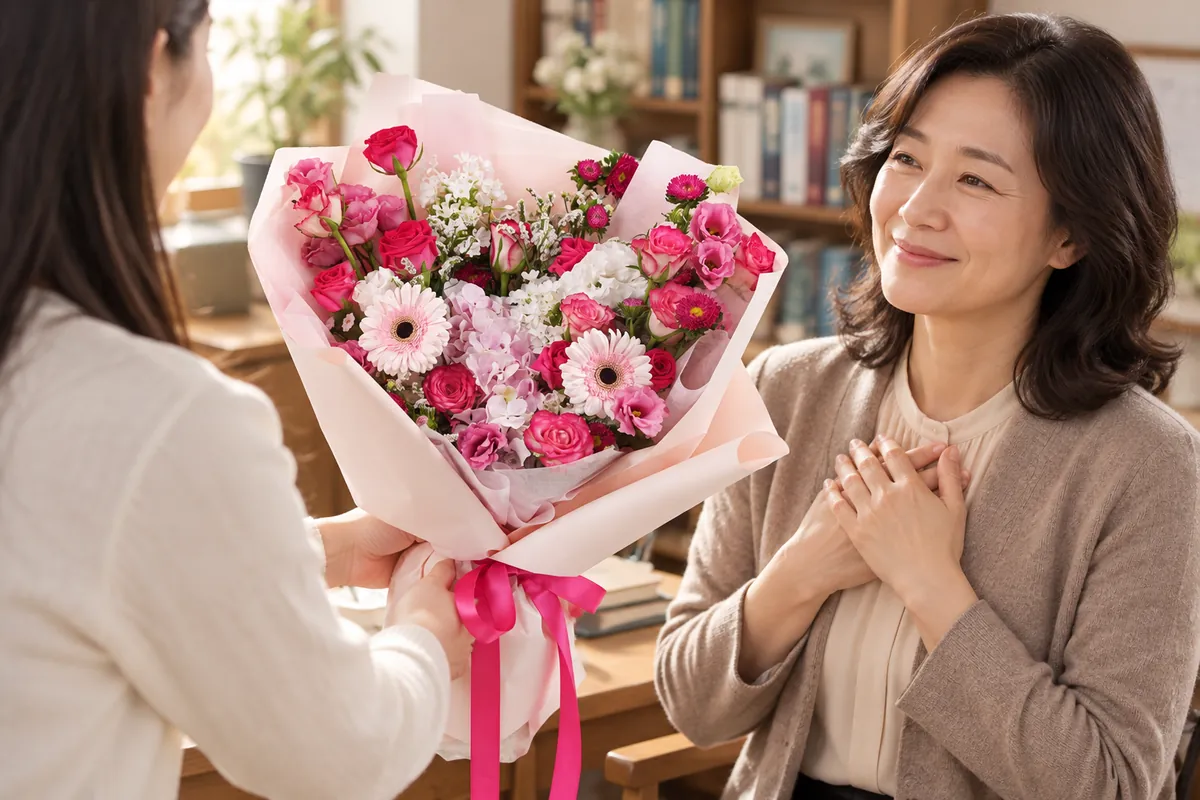
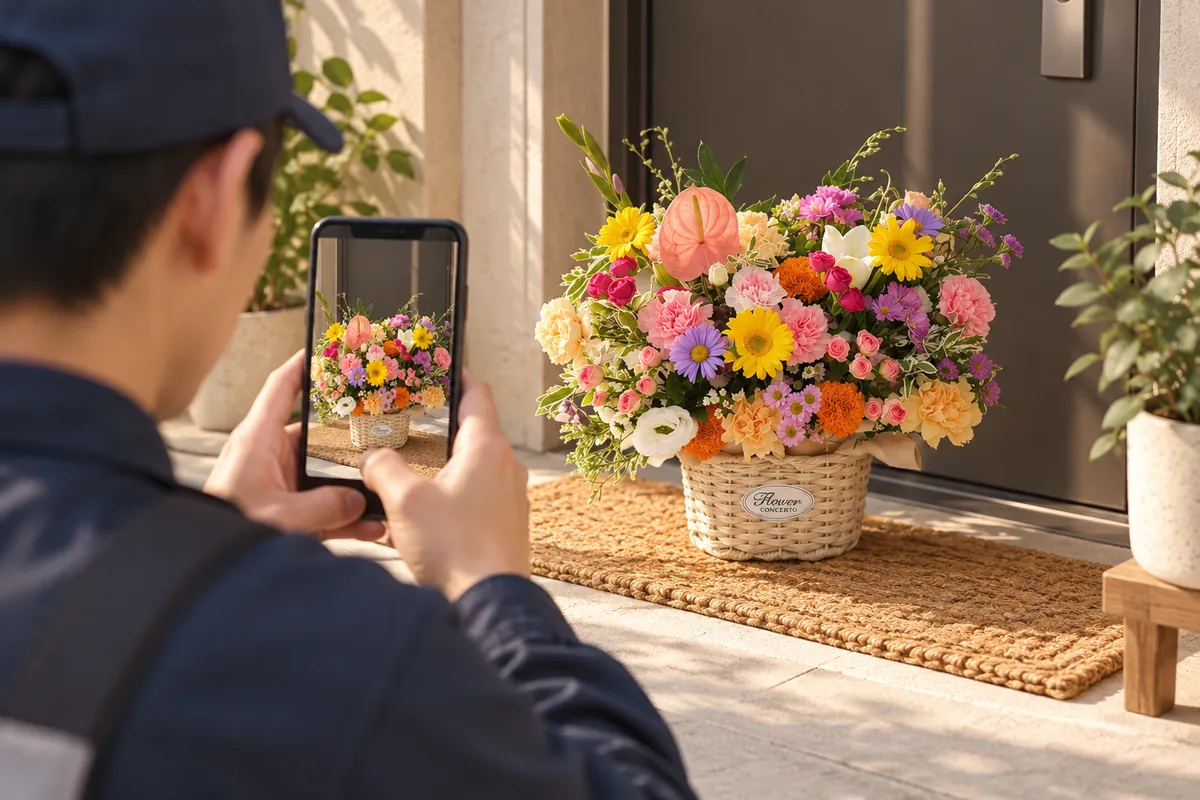
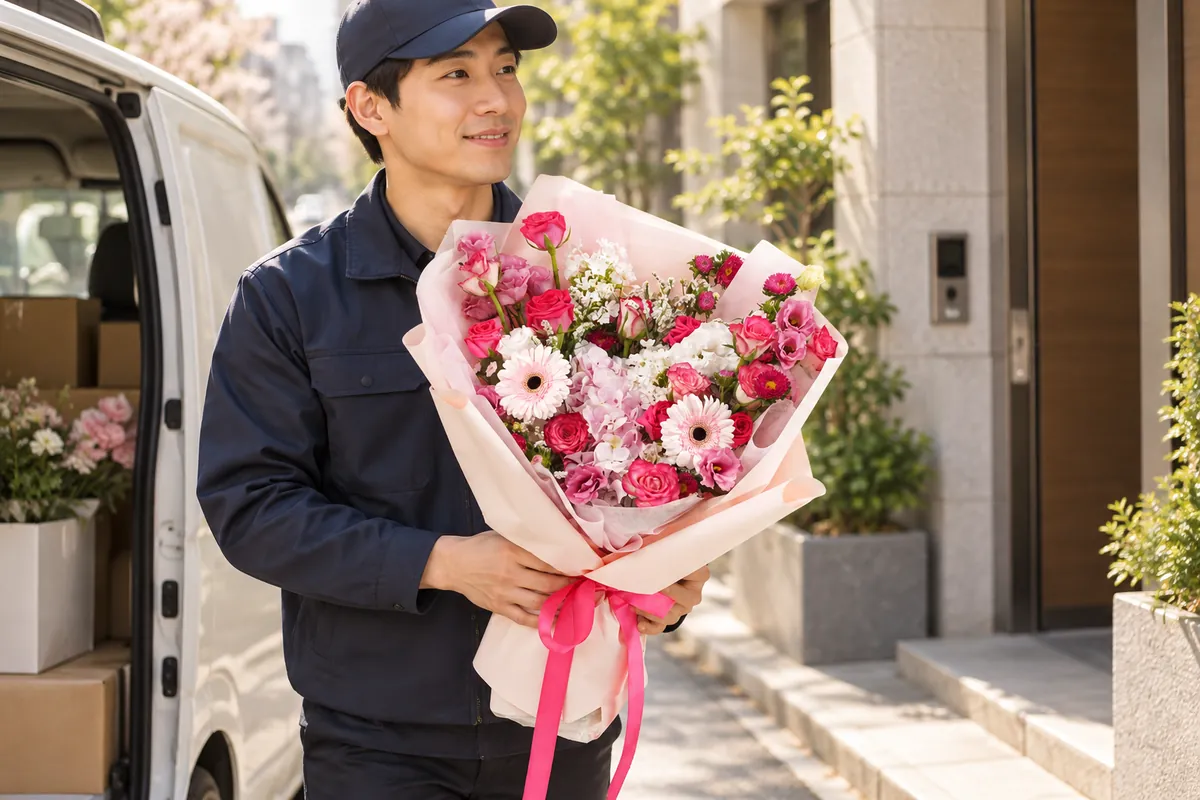
A bouquet or a flower basket goes to a person — a birthday, a thank-you, an apology, a new home. It is handed over, kept, and looked at. Bouquets start at ₩45,000 and baskets at ₩47,000. A basket needs no vase, so it is the easier choice if the recipient is somewhere they cannot go looking for one — an office, a classroom, a shop counter.
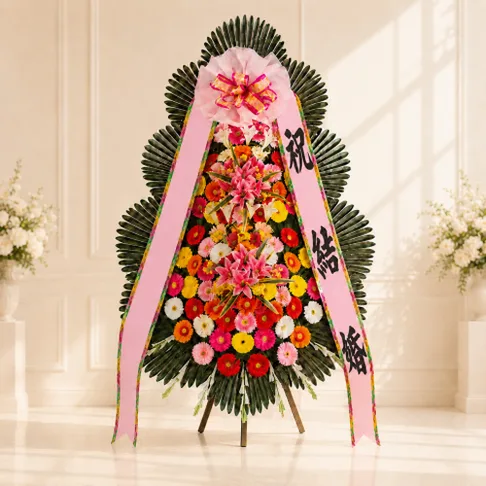
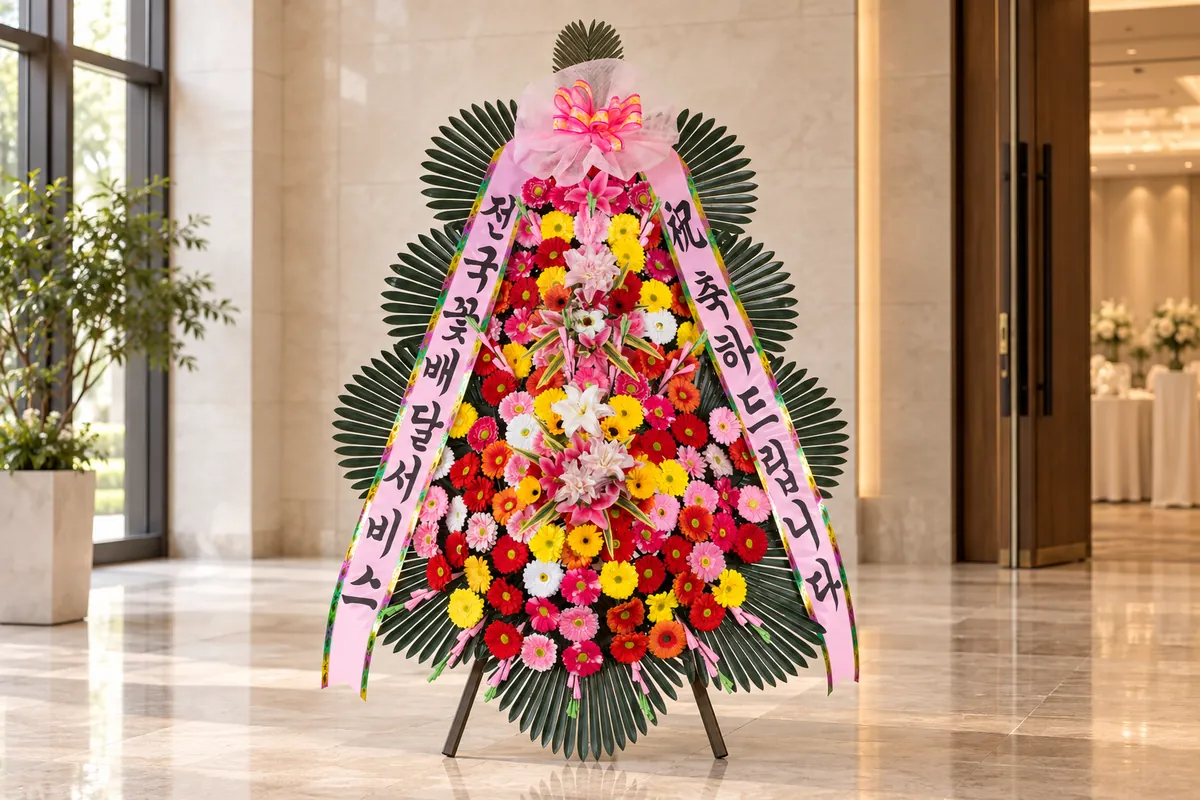
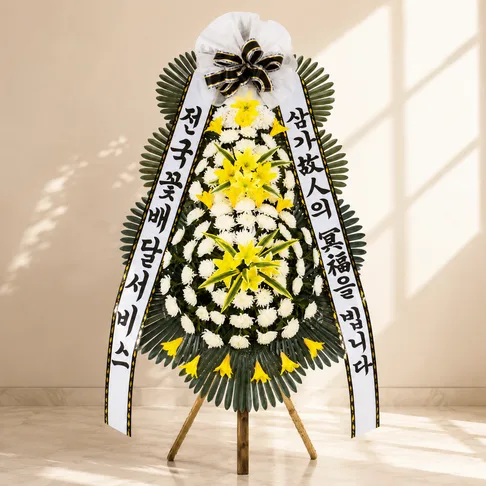
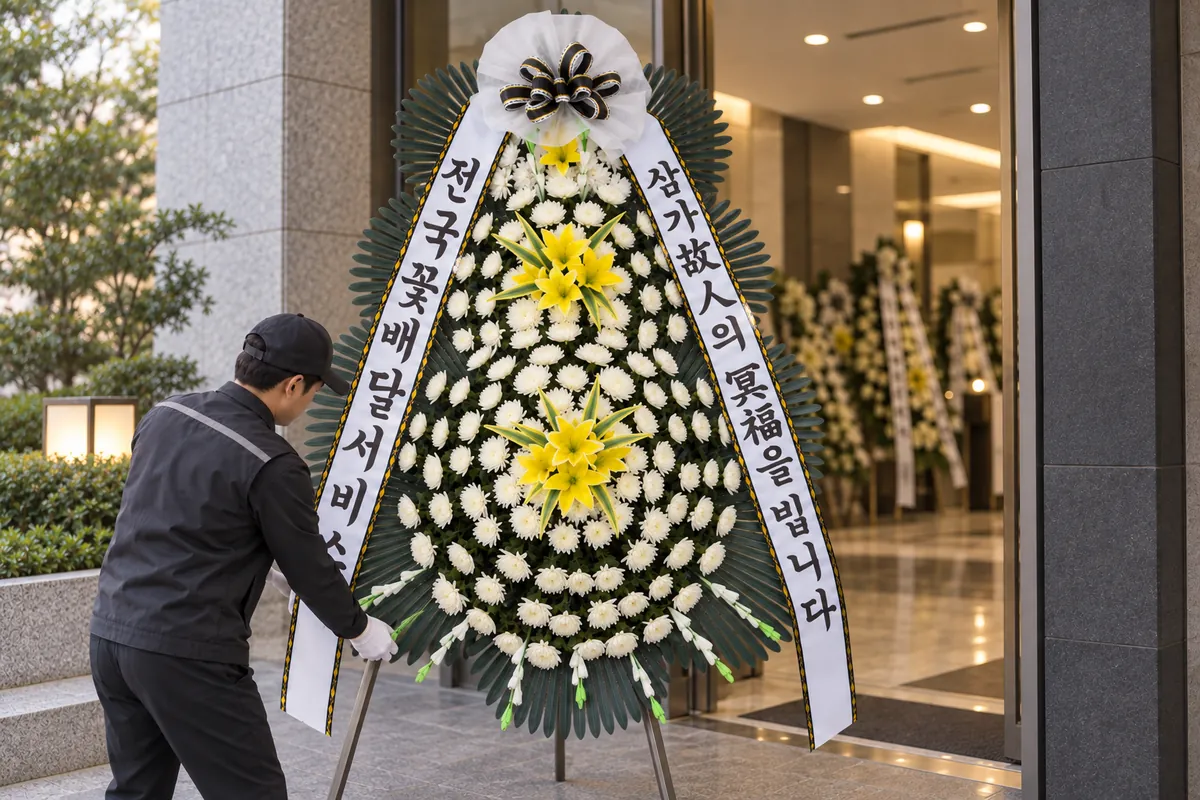
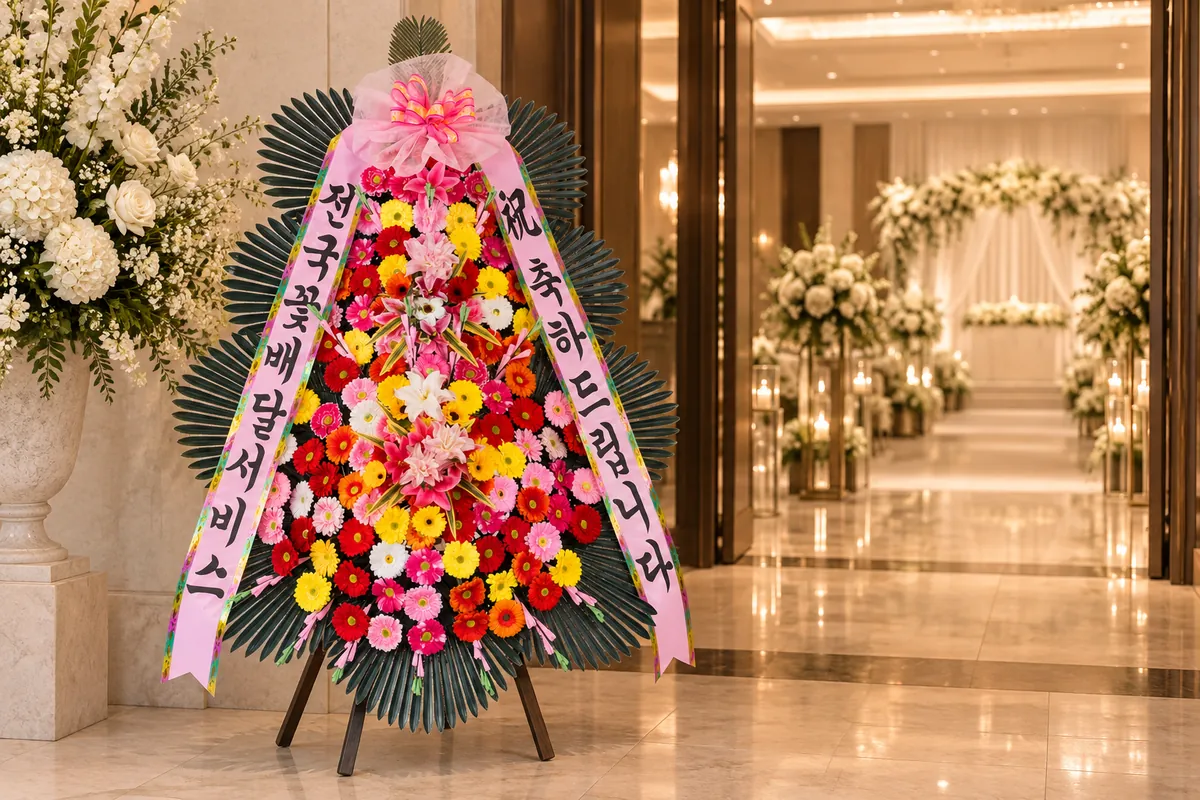
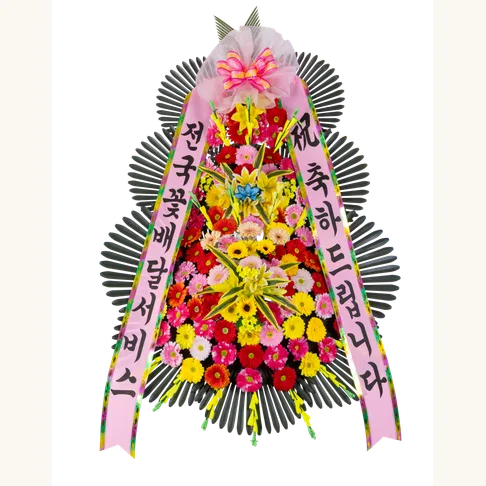
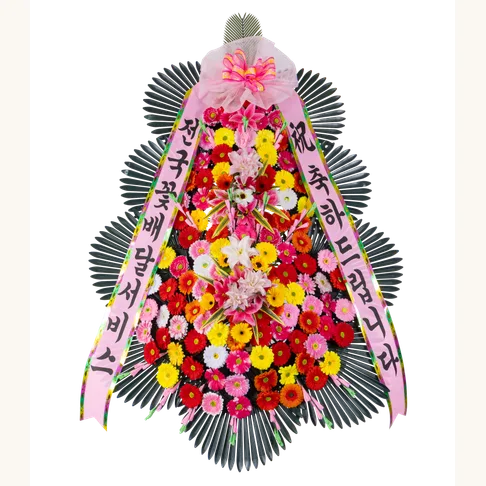
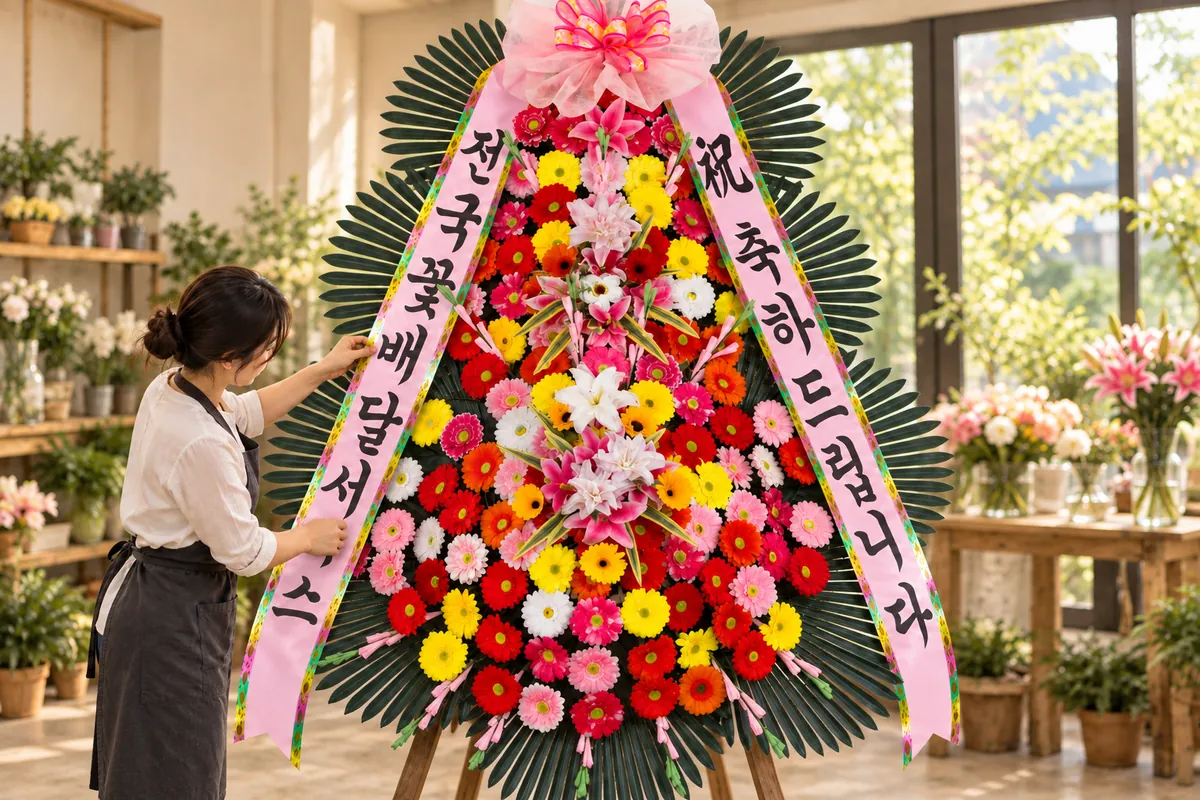
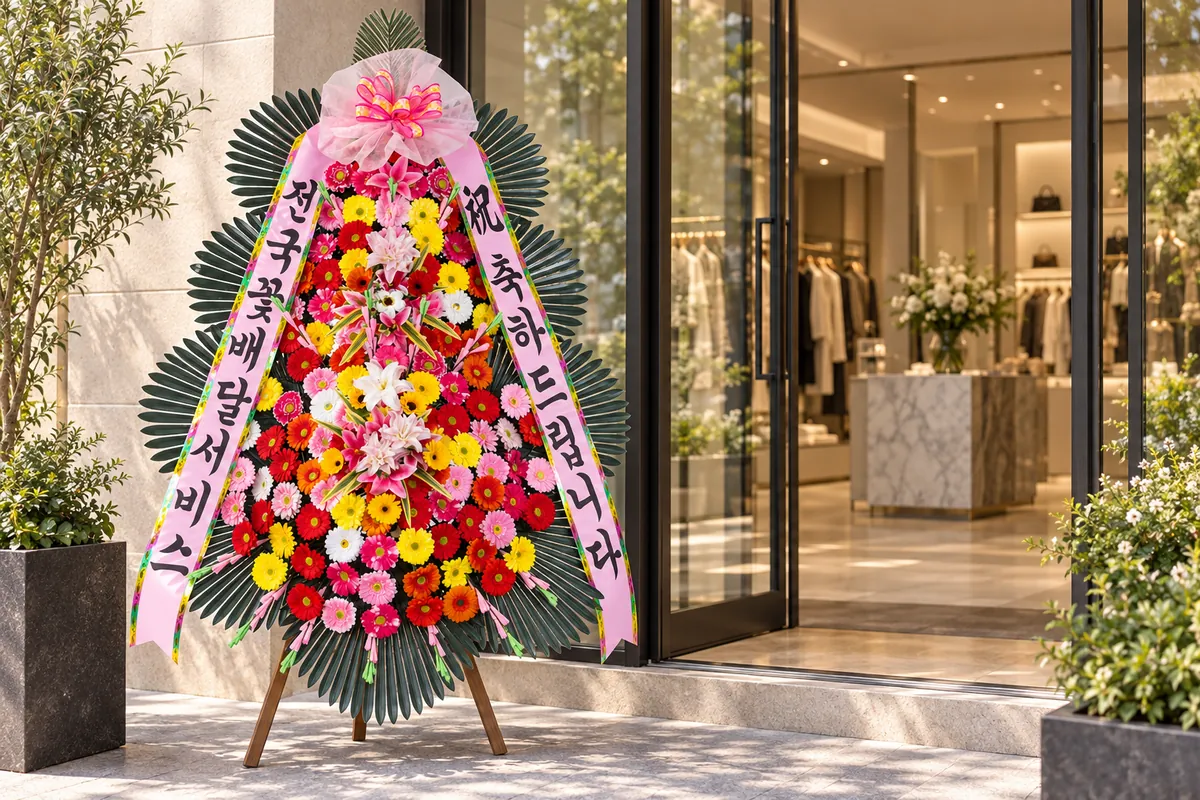
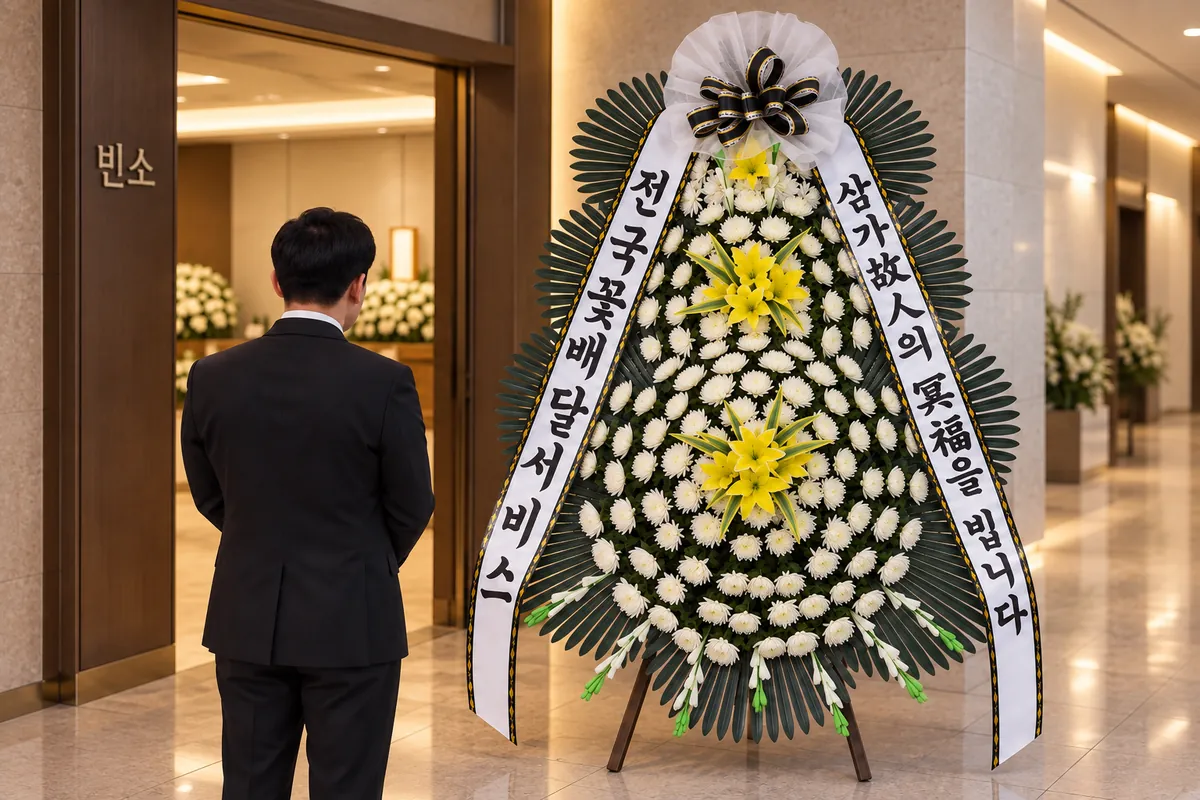
A standing wreath (화환) is a tall floral display on a stand, delivered to a venue and placed at the entrance. It announces publicly that you sent it. Koreans send these to weddings, funerals, grand openings and ceremonies — not to a person at home.
If you are not sure which the occasion calls for, tell us what it is and we will say.
My family is in Korea and I cannot visit. What can I send?
Flowers are the usual answer, and they carry further than a parcel — they arrive the same day, and someone hands them over.
For parents and grandparents, a flower basket is the kind choice. It arrives ready to put down, needs no vase, and holds its shape for days. Baskets start at ₩47,000. For a birthday or a graduation, a bouquet is the one to send — made that morning with flowers from the Busan market. From ₩45,000.
Write your message in the order form and we print it on a card that goes with the flowers. That card is often the part people keep.
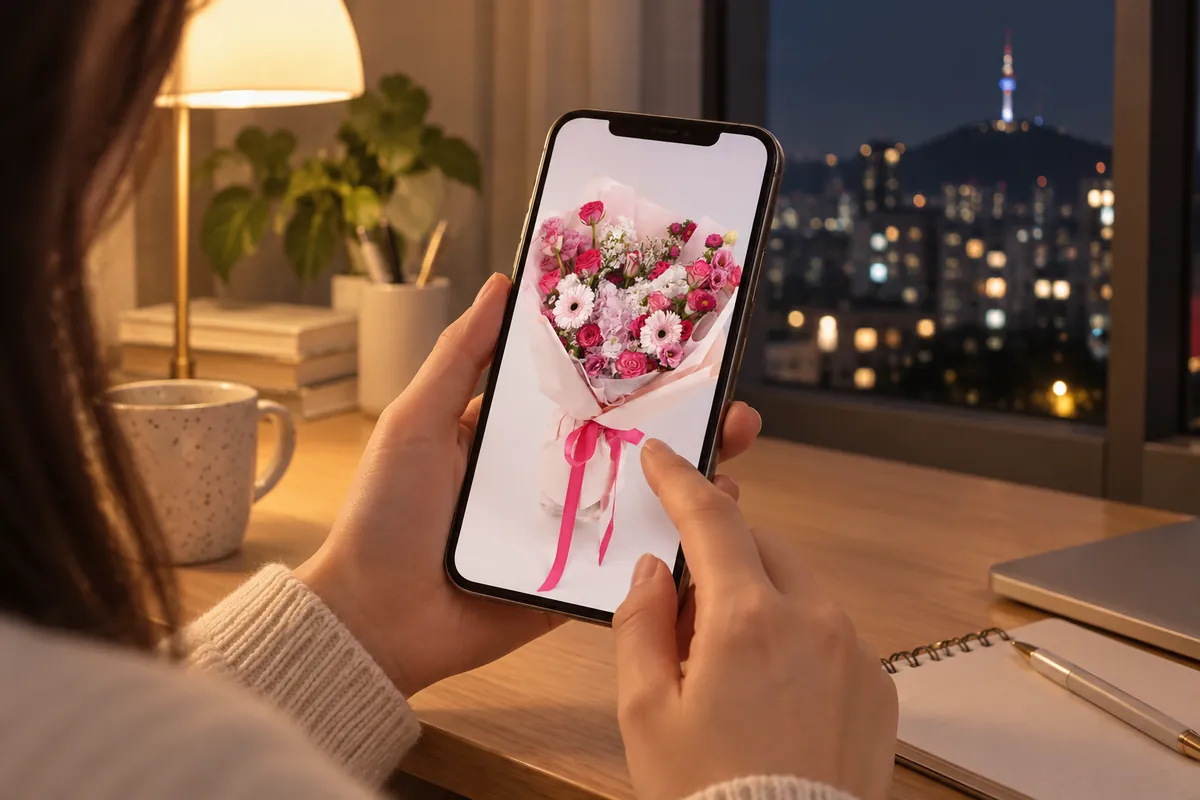
After delivery we email you the photograph, so you see the moment even from another country.
I want to send flowers to my girlfriend or boyfriend in Korea. What do people send?
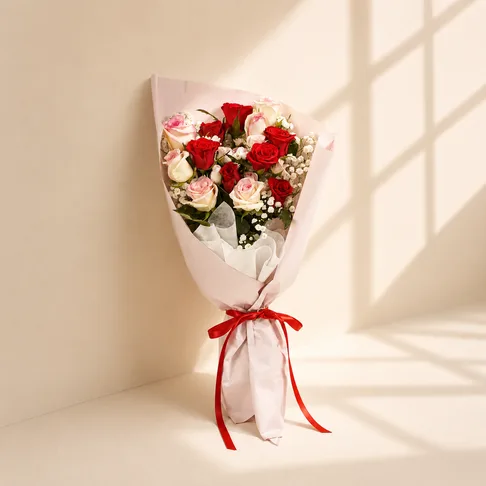
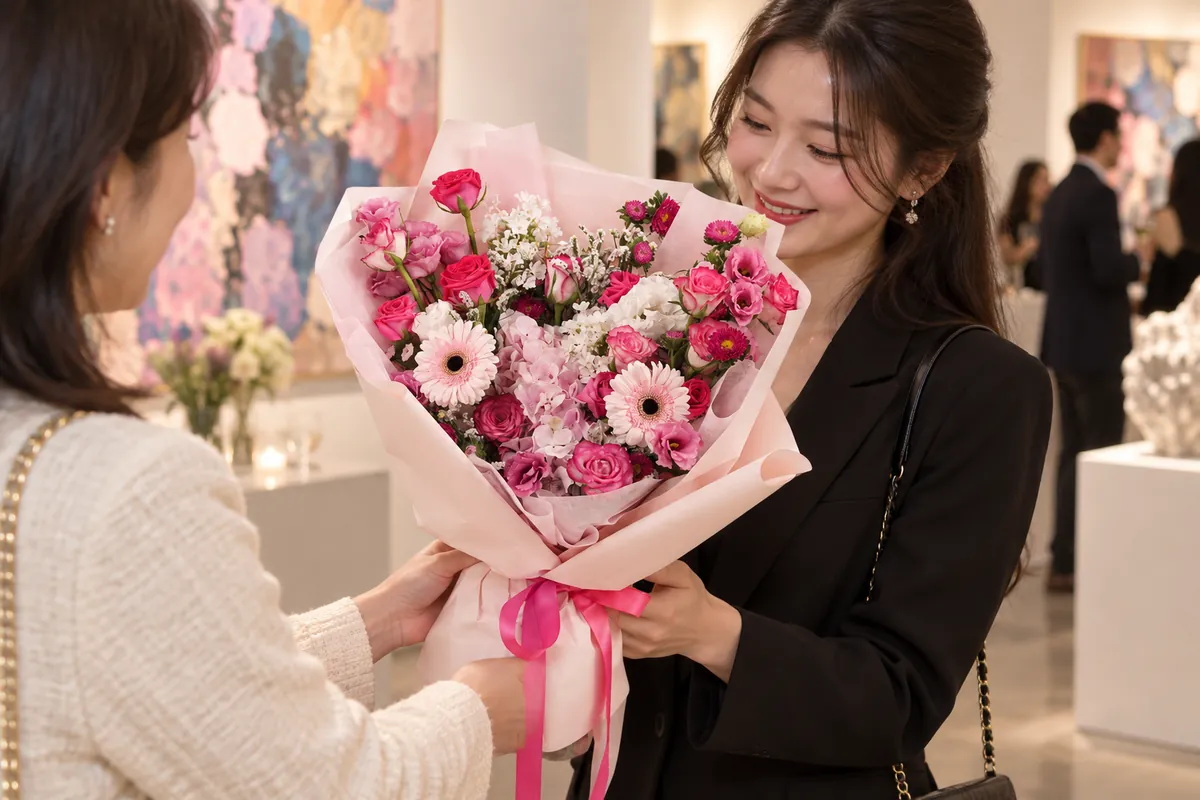
A hand-tied bouquet. It is what is given in person in Korea, so it is what reads as romantic when it arrives instead of you. From ₩45,000.
One practical thing: give us the full delivery address and their mobile number. If they are at an office or a campus, include the floor or room — that is where deliveries go wrong. Our driver calls that number if the address turns out to be unclear or nobody is there.
Put what you want to say in the message field. We print it on a card and send it with the bouquet.
Can I send flowers to a teacher or a colleague in Korea?
Yes, and to a workplace a flower basket is easier than a bouquet — nobody has to find a vase, and it can be set straight down on a desk or a counter. From ₩47,000.
Give us the building, the floor or room, and a phone number. Korean offices, schools and large buildings often have several entrances, and that is where deliveries go wrong.
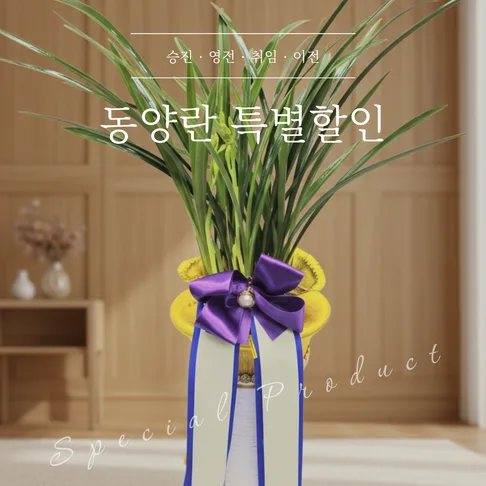
If the flowers are for a formal occasion — a promotion, a retirement, an opening — an orchid in a pot is the more customary gift. See the question about promotions below.
What is a Korean standing wreath, and what do the tiers mean?
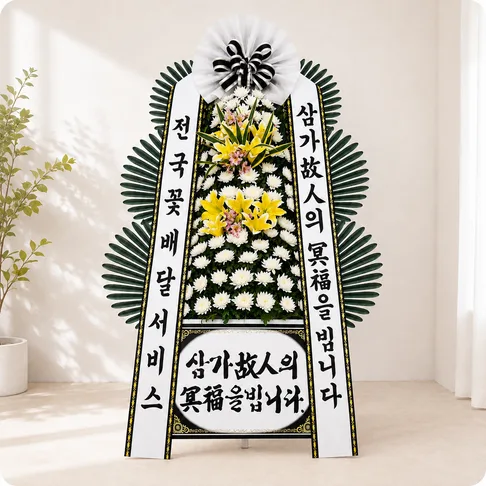
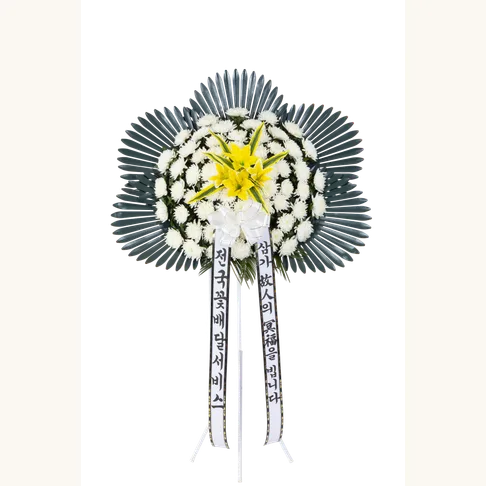
A standing wreath is roughly two metres tall, built on a stand, with flowers arranged in tiers. The number of tiers is how Koreans describe the size — a three-tier wreath is the ordinary one, four and five tiers are larger and cost more.
Congratulatory wreaths run from ₩49,000 to ₩194,000. Funeral wreaths run from ₩49,000 to ₩199,000.
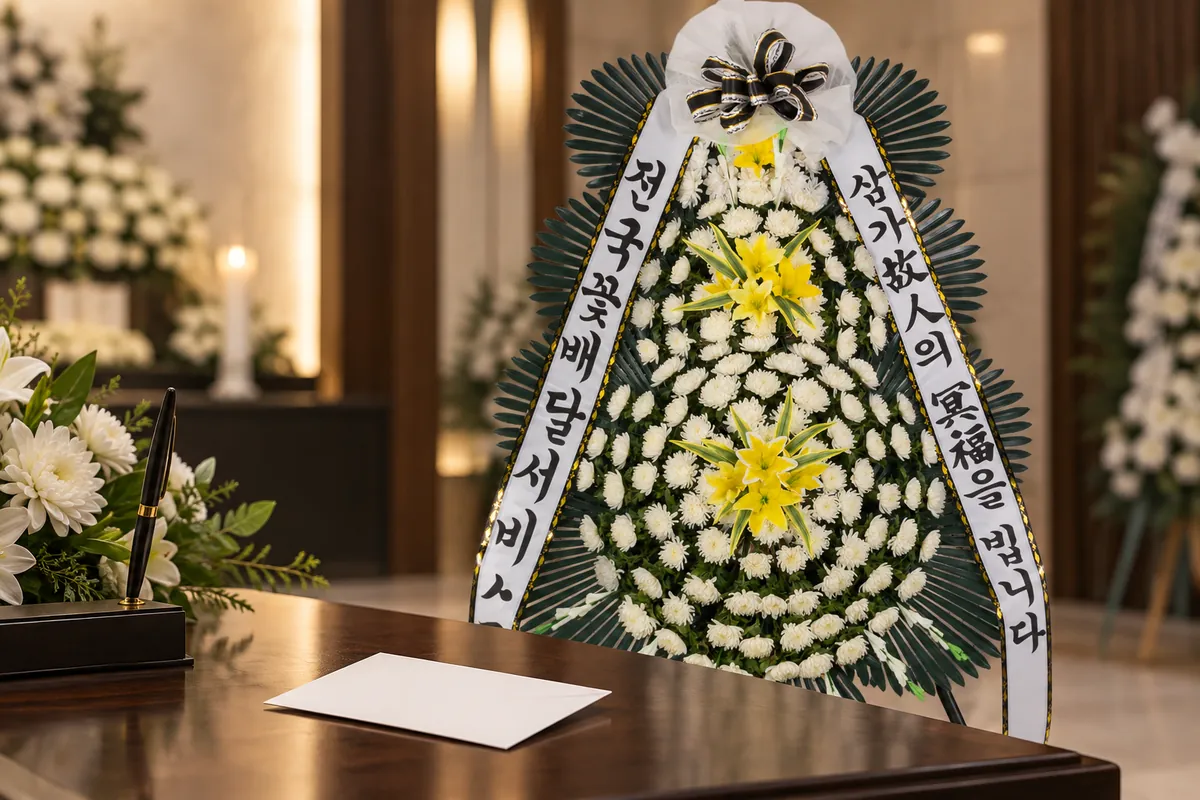
Two ribbons hang from the wreath: one carries the phrase for the occasion, the other carries the sender's name. That is how everyone at the venue knows who sent it.
Someone has died in Korea. How quickly can a funeral wreath arrive?
We work backwards from the time mourners will be at the funeral hall. Tell us the hall, the room, and roughly when people will be visiting, and we aim to have the wreath standing before then.
Korean funeral halls stay open for several days, so there is usually room to arrange the timing. Delivery anywhere in the country takes up to three hours, and we need the order by 6:00 PM KST for same-day delivery.
One thing we cannot do: if the funeral procession leaves that same morning, there is no longer time to make and deliver a wreath. In that case send a condolence message instead — we would rather say so now than take an order that cannot arrive.
How far ahead should I order for a Korean wedding?
Order the day before. Wedding wreaths are harder to arrange same-day than funeral wreaths, and weekends are the busiest.
The reason is timing, not flowers. A funeral hall is open for days. A wedding has one fixed hour, the wreath has to be standing before it, and after that hour it means nothing. So the cut-off is much tighter.
The recipient's name and Korean mobile number, the delivery address, and the date and time you want it to arrive.
For a venue — a funeral hall, a wedding hall, an office — also give us the room or floor. Korean venues often run several events at once, and the room name is what gets the flowers to the right one.
The recipient’s phone number matters more than you might expect. If the address turns out to be incomplete, or nobody is there to receive the flowers, our driver calls that number. Without a number that answers, the flowers wait.
You can also send a message to go with the flowers. Write it in the order form and we print it on a card and send it with them.
If you are sending a wreath, we also need the ribbon wording.
What do I write on the ribbon, and can it be in English?
Yes, English is fine. Nothing is translated or corrected — we print exactly what you type, so please check the spelling before you send it.
One ribbon carries the phrase for the occasion; the other carries who it is from. For the sender, write it as the recipient will recognise you — a company name, a name with a title, or a family name are all normal.
If you would like the wording in Korean and are not sure what to write, tell us the occasion and your name and we will suggest the usual phrase.
How do I know the flowers actually arrived?
Once the delivery is done we email you a photograph of the arrangement, so you can see what was made and check that the ribbon reads correctly. Give us an email address you actually check.
A photograph of the wreath standing at the venue is not something we can promise every time — funeral halls and wedding halls do not always allow it. If you want one, ask when you order and we will try.
Will the flowers look exactly like the photograph?
Close, but not identical. Flowers are seasonal and sourced regionally, so the exact stems change through the year.
What we hold to is the size, the colour scheme and the overall impression. If a particular flower matters to you — because it carries a meaning, or the recipient loves it — tell us when you order and we will say whether we can get it that day.
Where do you deliver, and is there a delivery charge?
Anywhere in South Korea, the same day, with no delivery charge. Give us the address and a florist near the recipient makes and delivers the flowers — so it arrives genuinely local and fresh wherever your person is, not shipped across the country.
Remote islands and some mountain areas carry an extra fee. We tell you the amount before we go ahead — it is never added quietly after you have paid.
A Korean colleague has been promoted. What is the usual gift?
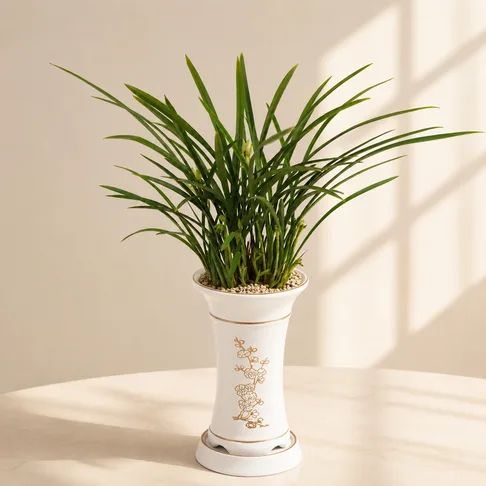
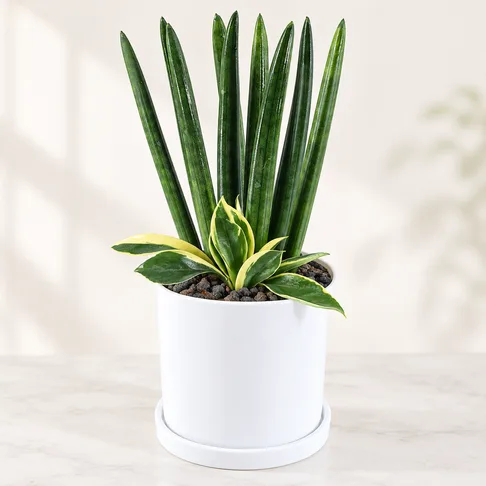
An orchid in a pot. For a promotion, a transfer or taking up a post, the customary choice is a Korean cymbidium — long, upright leaves in a ceramic pot, formal rather than showy. From ₩47,900.
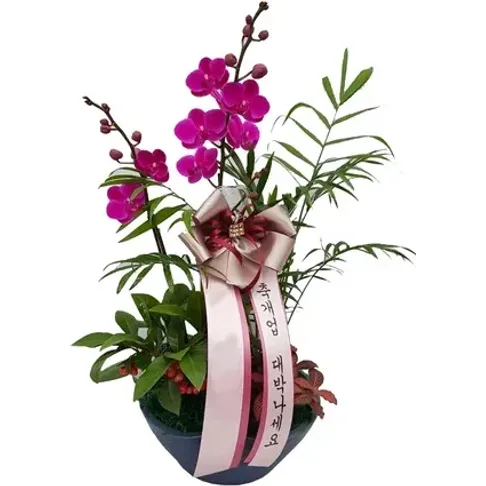
For a shop opening or a thank-you, a phalaenopsis is more usual — the flowers are bright and it lifts the room. From ₩49,000.
Both last far longer than cut flowers, which is part of why they are sent to an office.
A friend is opening a business in Korea. Wreath or plant?
A wreath if you want the congratulations visible on opening day; a potted plant if you want something that stays.
The wreath stands outside the shop where customers see it and is usually collected after a few days. A foliage plant remains in the shop or office long afterwards. Many people send both.
Someone in Korea has died. Am I expected to send flowers?
No. A funeral wreath is not a required step of etiquette — it is one of several ways of saying you know what has happened. Not sending one is not a discourtesy.
The useful question is not how close you were, but whether you can be there. If you can attend, your face is the greater comfort and no wreath is needed. If you are abroad and cannot go, that is exactly when a wreath stands in your place in front of the mourning room and leaves your name there.
A company or an organisation is a different case. An individual who does not attend simply does not attend, but a wreath sent in a company’s name reads as this organisation knows. If nobody from the company can go, one wreath is usually the right thing to send.
If you decide not to send flowers, send word. A short message reaches the family, and it is often remembered longer than flowers that arrive with nothing said.
It is also rarely too late. Wreaths keep arriving at the hall until the day before the funeral procession leaves. Check the time of the procession first — if there is time left, we can still deliver that day.
What is condolence money, and do Koreans send it as well as a wreath?
They are two different things and you can do one, or both. Condolence money (조의금, jouigeum) is cash handed to the bereaved family at the funeral hall. A wreath stands at the entrance carrying the name of whoever sent it. Different recipient, different place.
Condolence money goes to the family. It shares the real cost of holding the funeral. It is put in an envelope with the sender’s name written on it and handed in at a reception desk, and the family goes through the names afterwards.
The wreath is seen by everyone. It stands where every visitor walks past and reads the ribbon — a public mark rather than something passed to one person. That is why a wreath in a company’s name carries the weight it does.
So if you attend in person, condolence money on its own is usually enough. If you could not attend and sent only a wreath, money can follow later without being late. A company wreath and a personal envelope sit together comfortably: the ribbon carries the company name, the envelope carries yours.
Sending the cost of the wreath as condolence money instead is a real option too. If the mourning room is small, or wreaths have already filled the corridor, that is sometimes of more use to the family. When you cannot tell from a distance, someone close to them will know.
I have been invited to a Korean first-birthday party or a housewarming. What do I send?
Not a standing wreath. Both are private events held indoors, so the choice is between a flower basket, a bouquet and a potted plant. A wreath is made to stand at an entrance where people come and go; these gatherings have neither the doorway nor the passing crowd that gives it its point.
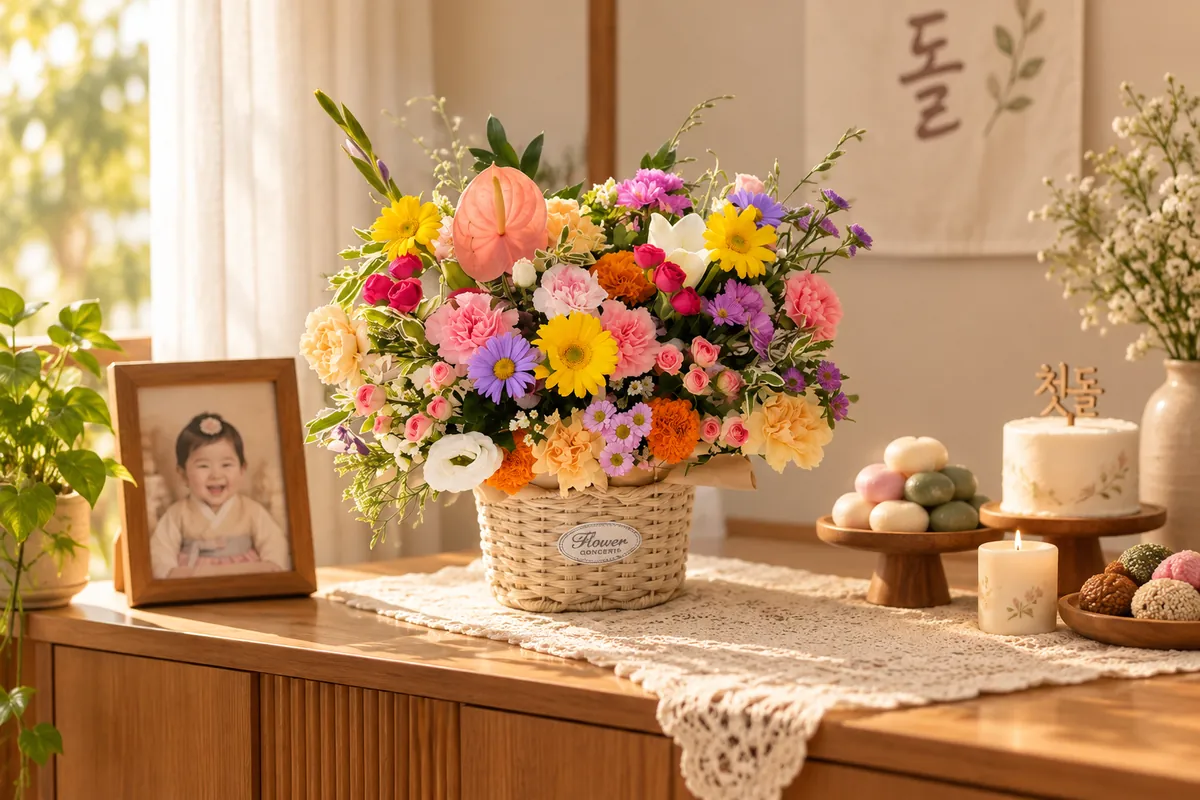
A 돌잔치 (doljanchi) is the party for a baby’s first birthday, usually a hired banquet room and over in two or three hours. A flower basket suits it: it can be set down beside the table where the photographs are taken and carried away afterwards, and no vase has to be found. From ₩47,000.
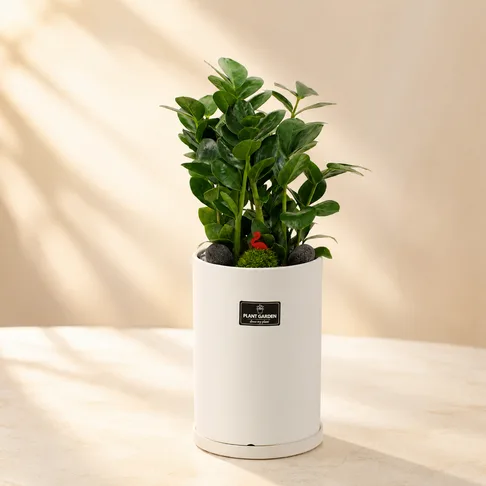
A housewarming is better served by a potted plant. It is a question of what goes into a new home, and something that settles in and stays beats something that fades in a few days. Foliage plants run from floor-standing down to shelf-sized — decide where it will stand, then pick the size.
A bouquet is for when one person is receiving it: the baby’s mother, the host of the housewarming, handed over directly. Bear in mind they will be holding it all evening, so where there is a lot to carry a basket or a plant is kinder. From ₩45,000.
Colour follows the occasion — bright mixed colours for a child’s day, one calm colour family for a home. A ribbon is optional at these private events and many are sent without one; if you do want wording, plain language reads better here than a formal set phrase.
I am proposing in Korea. What should I have ready, and when?
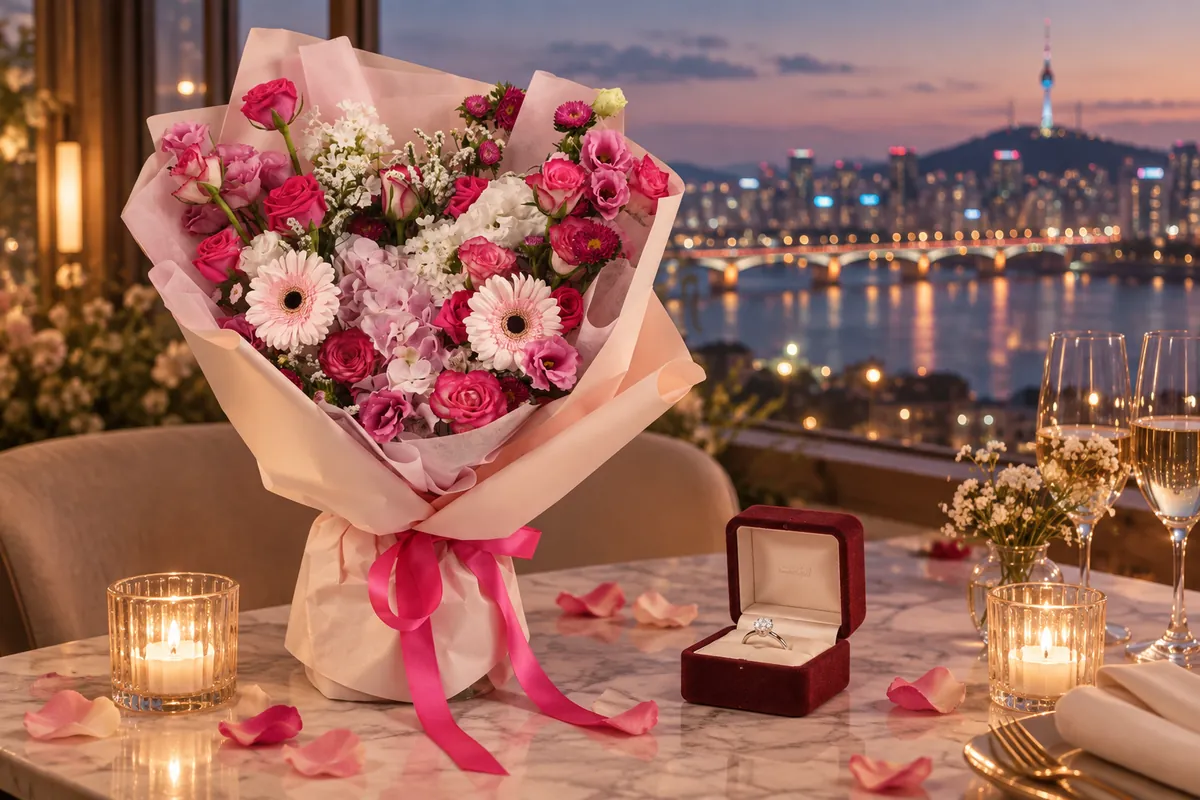
A bouquet. It is made to be put into someone’s hands at a particular moment, which is a different thing from a basket or a plant that gets set down somewhere. From ₩45,000.
Three things decide which one. Size first: bigger is not better. A bouquet large enough to hide the upper body leaves no face in the photographs and has to be carried afterwards. What fits comfortably in two arms is what actually photographs well.
Colour next. Red roses are the old choice and still the clearest one, though bouquets kept to a single soft family — pale pink, apricot — go out just as often now. If there is a colour they love, that is the surest answer of all.
Place last: indoors or out, and how long it has to be held. In a restaurant or a café, a size that will stand on the table. Where there is a lot of moving about, something smaller and tightly tied.
The hour matters more than the day. The flowers have to be in your hands before you meet, so give us the time and the place you are meeting and we work back from it. Many people have them delivered to a home or an office earlier in the day and carry them from there. If it has to stay a secret, say so when you order — we keep the delivery notice off the other person’s number and confirm arrival only with you.
A friend is performing or opening an exhibition in Korea. What do I send?
Ask the venue first. Concert halls and exhibition spaces restrict standing wreaths more often than wedding halls do, so a potted plant or a flower basket is the usual answer.
The reason is the building rather than the event. The lobby a wreath would stand in is frequently shared space, and several performances or exhibitions may be running in the same building at once, so the building decides what comes in. The organiser knows the terms of the hire and will give you a precise answer; if asking feels awkward, the venue’s information desk will tell you too.
Where wreaths are allowed, a congratulatory wreath is what is sent, and the ribbon simply names the event — 祝 公演 for a performance, 祝 展示會 for an exhibition, 祝 個人展 for a first solo show. No set Chinese-character phrase is obligatory; plain wording such as "congratulations on your first solo exhibition" is not a breach of etiquette.
Where they are not allowed, a flower basket is the easy choice — it sits on a dressing-room or reception table and goes home at the end. For an exhibition running over several days a potted plant is better, since it holds up for the whole run where cut flowers will not. For a performance, a bouquet handed over after the curtain is right, as long as it is small enough not to become luggage for someone who still has to travel home.
Timing is tighter here than for most occasions. A performance starts at a fixed hour and an exhibition opens at one, and after that the crowd disperses. Tell us the hour the flowers have to be standing there and we work backwards from it.
What happens to the wreath after the event is over?
The venue clears it. We do not collect wreaths, and there is nothing for you or for the person receiving it to do.
We make the wreath and stand it in the right place at the right hour; what happens after the event belongs to the wedding hall or the funeral hall. Both hold several events a day and have their own procedure for it. So there is no return, no collection charge, nothing further to pay and nobody to ring once you have sent it.
The family or the hosts are not expected to clear it away or send anything back either. Some people keep the ribbon — that is a choice, not an obligation.
If you want something that stays, send a different form. A wreath is made for one day and ends with it. A potted plant remains in the space long afterwards, which is why it suits an opening or an anniversary where the room goes on being used.
What does stay with you is the photograph. We email it once the delivery is done. The wreath is cleared away at the end of the day; the photograph is not.
It is the middle of the night in Korea. Can I still order?
You can leave it with us. We take orders 08:00–21:00 KST, open every day, every day including weekends and public holidays. Outside those hours, send the details anyway and we come back to you as soon as the day begins.
News of a death keeps no office hours, and neither do time zones — most people ordering from abroad are awake while Korea is asleep. You do not have to hold on to it until Korean morning.
Three things make it quick when you leave a message: the exact name of the place it is going to — for a funeral hall the room number, for a wedding hall the floor and the name of the hall — the hour it has to be there by, and the wording for the ribbon. If you have a funeral notice or an invitation, forward it exactly as it reached you and we will read it and check it.
What we cannot do is deliver overnight. Order by 6:00 PM KST for same-day delivery. An order left during the Korean night is worked on from that morning. If it is tied to a fixed hour — a funeral procession, a ceremony — give us that hour and we work backwards from it.
Can I send a cake or champagne along with the flowers?
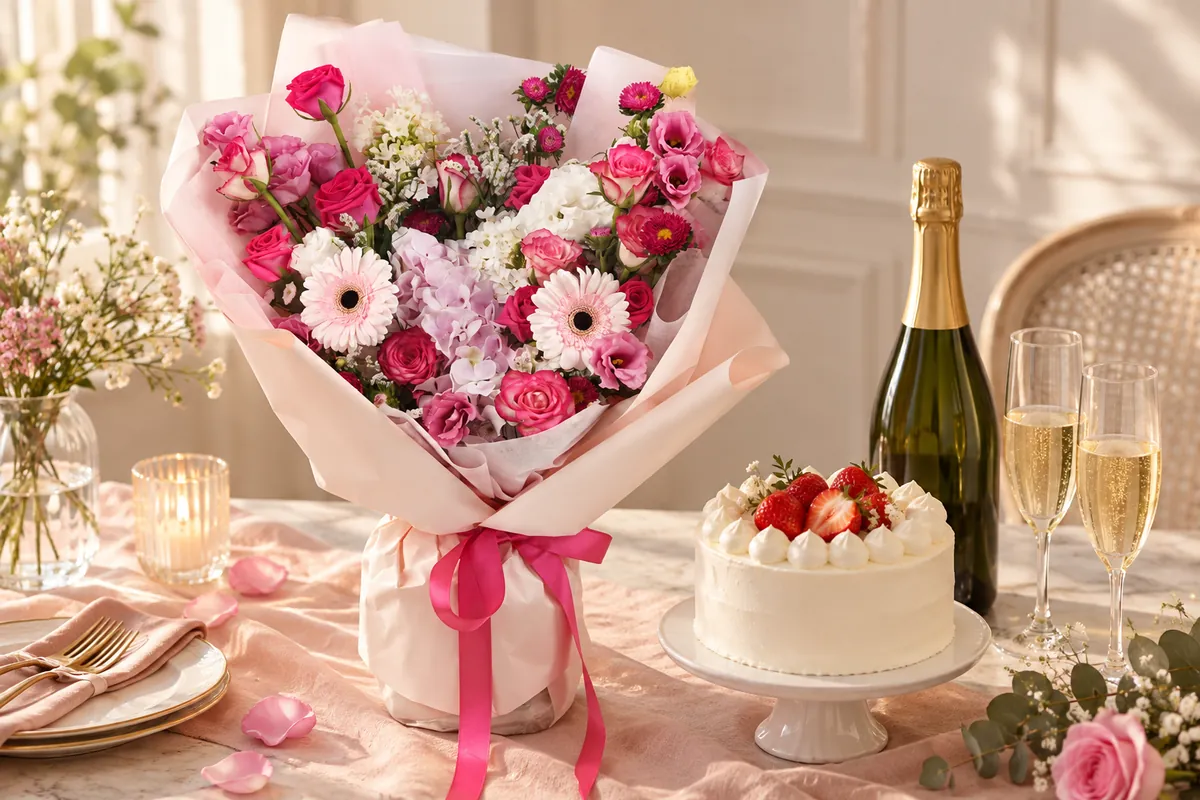
Yes — and if you are sending from outside Korea, this is the part worth knowing. Six things can go with a bouquet or a flower basket: a fresh cream cake, champagne, chocolates, candy, Pepero sticks, or a corsage. One from each group.
From another country you cannot buy the cake yourself. The only alternative is to ask someone in Korea to go out, buy it, and get it to the same place at the same time — which turns your gift into somebody else's errand, and leaves two separate arrivals to coordinate. Sent with the flowers it is one delivery, at one time, to one address, and the cake arrives with the flowers rather than on its own.
Cake comes in three sizes (₩31,000–₩38,000), champagne in three (₩10,000–₩30,000). Chocolates, candy and Pepero sticks are ₩10,000 each. A corsage — the small flower worn pinned to a jacket at a graduation or a wedding — is ₩6,000.
One item per group. A cake and a bottle of champagne together is fine; two cakes is not. Choose nothing and the flowers go on their own.
These are attached to bouquets and flower baskets only. Standing wreaths, Korean cymbidiums, phalaenopsis and bonsai do not carry them — a wreath stands at an entrance and an orchid is sent as a formal greeting, neither of which is a place to set a cake.
Do not confuse this with the Standard / Deluxe / Premium grades shown on the same page. Those add more flowers to the same arrangement; they do not add an object. You choose one grade, and anything you send with it is added on top.
If you are unsure, tell us the occasion. A birthday usually takes the cake, a celebration the champagne, a graduation the corsage — we will ask as we take the order. Start a live chat on this site and a person will answer. Everything that can travel with the flowers is listed on flowers with a gift.
Message us and a person will answer, usually within a few minutes during opening hours — and if you write outside them, we reply as soon as we open. We can help with the address, the ribbon wording, or choosing between arrangements.